
Decorative concrete can do more than improve the appearance of a public building. In healthcare facilities, schools, government buildings, and other high-traffic public spaces, it can combine the durability expected from commercial concrete with a finish that supports the architectural character of the project.
The question is whether the additional investment makes sense.
For many projects, the answer depends less on appearance alone and more on how the concrete will be used, maintained, and exposed over its service life. Decorative concrete can provide meaningful value when the finish is selected with traffic, climate, maintenance, accessibility, and design requirements in mind.
What Makes Concrete “Decorative”?
Decorative concrete uses color, texture, exposed aggregate, architectural finishes, or other surface treatments to create a specific visual result while maintaining the functional role of concrete.
On commercial and public projects, decorative concrete may include:
- Sand-finish concrete
- Exposed aggregate
- Colored concrete
- Architectural concrete walls
- Textured slabs
- Decorative site walls
- Custom surface finishes
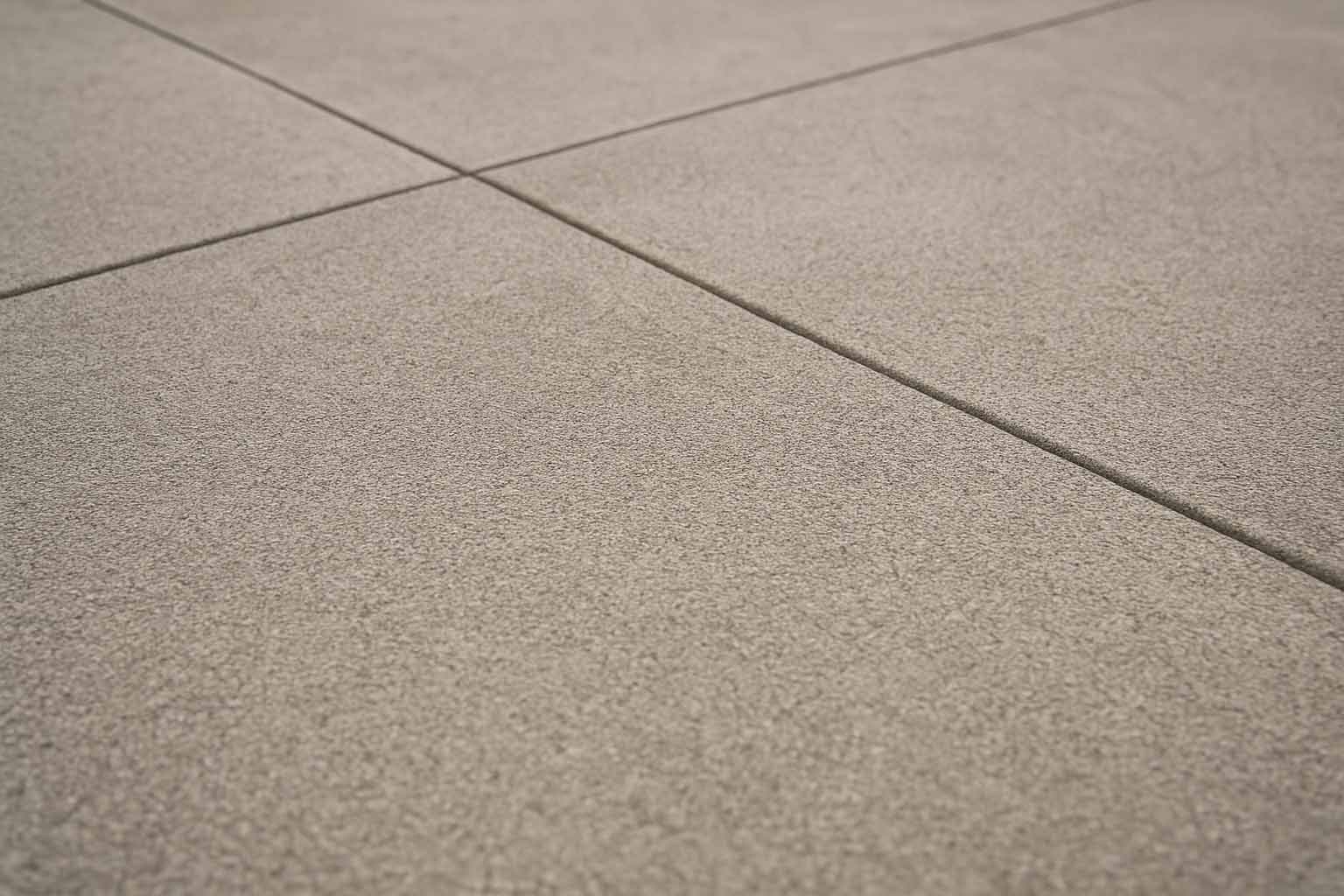
These finishes are often incorporated into plazas, entrances, walkways, courtyards, retaining walls, gathering areas, and other highly visible parts of a property.
Unlike a separate finish applied over another building material, many decorative treatments become part of the concrete installation itself. That can make decorative concrete particularly useful for public environments where appearance and long-term durability both matter.
Why Public Spaces Require a Different Approach
Concrete for public spaces has to handle conditions that private or lightly used spaces may never experience.
A hospital entrance may see patients, employees, visitors, wheelchairs, carts, maintenance equipment, and snow removal operations. A school courtyard can experience concentrated pedestrian traffic throughout the day. A government plaza or public walkway may remain exposed to weather and continuous community use for years.
That means decorative decisions cannot be based on appearance alone.
Finish selection should consider expected traffic, drainage, slip resistance, accessibility requirements, exposure to snow and ice, maintenance practices, and how easily the finished surface can be kept consistent.
The same principle applies to conventional commercial concrete. Good appearance starts with good construction. Subgrade preparation, reinforcement, joint planning, placement, finishing, and curing all influence how the finished concrete performs.
Decorative Concrete in Healthcare Environments
Healthcare facilities have to balance function, accessibility, durability, and a welcoming environment. Concrete plays a role in many of those spaces, from exterior walkways and building entrances to site walls and other exterior improvements.
Coloscapes’ healthcare projects include concrete work for hospitals and medical facilities involving sidewalks, paving, curb and gutter, foundations, slabs, and other site elements. [Internal link: Healthcare Projects]
Decorative concrete can make sense in these environments when an architect or owner wants public-facing areas to complement the overall facility design without giving up the durability of concrete.
For example, a textured architectural wall can add visual character to an entrance. A carefully selected decorative finish can distinguish a pedestrian gathering space from surrounding standard flatwork. Color or exposed aggregate can also help create subtle transitions between different parts of a site.
The priority, however, remains function. Decorative details should work with accessibility, pedestrian movement, drainage, maintenance, and the broader site plan.
Where Decorative Concrete Fits in Educational Projects
Schools, universities, libraries, and other learning environments often include significant outdoor circulation and gathering areas. Walkways connect buildings. Seat walls create places to gather. Courtyards and exterior spaces become part of everyday campus life.
These are natural applications for decorative concrete because the material can serve a practical purpose while contributing to the design of the campus.
Coloscapes’ education projects experience includes exterior site work, sidewalks, paving, stairs, seat walls, rain garden walls, curb and gutter, and other concrete elements. [Internal link: Education Projects]
For educational projects, the value of decorative concrete is often most apparent in areas where students, staff, and visitors interact with the site every day. A standard finish may be appropriate for service areas, while higher-visibility entrances, seating areas, or pedestrian corridors may justify a more architectural treatment.
Using decorative finishes selectively can help project teams put the budget where it has the greatest visual and functional impact.
Government Projects Put Long-Term Value in Focus
Public-sector construction often requires project teams to balance initial cost with long-term performance. Government buildings, transportation facilities, libraries, and civic spaces are expected to serve the public for years, which makes lifecycle considerations especially important.
Coloscapes has completed government concrete work involving exterior flatwork, retaining and planter walls, paving, sidewalks, curb and gutter, and concrete work within active public facilities. [Internal link: Government Projects]
Decorative concrete may cost more initially than a basic concrete finish because it can require additional materials, specialized formwork, more detailed finishing, tighter quality control, or additional coordination.
That does not automatically make it expensive over the life of the project.
The better question is whether the finish delivers enough architectural, functional, and maintenance value to justify the added scope.
What Determines Whether the Investment Is Worth It?
There is no single answer for every project. Several factors should be evaluated during design and preconstruction.
First, consider visibility. Decorative finishes generally provide more value in entrances, plazas, public walkways, gathering areas, and architectural features than in areas that receive little public attention.
Next, consider use. High pedestrian traffic, maintenance equipment, snow removal, and environmental exposure can all affect finish selection.
Consistency also matters. Decorative concrete makes workmanship highly visible. Formwork, placement methods, finishing techniques, color control, and curing can influence the final appearance. Mockups or clearly defined finish standards can help project teams align expectations before larger placements begin.
Finally, consider the entire lifecycle. Initial installation cost is only one part of the equation. Maintenance requirements, durability, repairability, and how well the material supports the architectural goals of the project should also be part of the decision.
Decorative Concrete Should Still Perform Like Commercial Concrete
A decorative finish cannot compensate for poor planning or installation.
Successful decorative concrete starts with the same fundamentals as other quality commercial concrete work. The base must be properly prepared. Reinforcement and joints must follow project requirements. Placement conditions need to be managed carefully. Finishing and curing must be consistent.
This is especially important in Colorado, where exterior concrete can face temperature swings, freeze-thaw conditions, moisture, and snow removal operations.
For healthcare facilities, educational campuses, government properties, and other public spaces, durability and appearance have to work together. A finish that looks appropriate on opening day but creates maintenance or performance problems later does not provide good long-term value.
So, Is Decorative Concrete Worth the Investment?
Decorative concrete can be a worthwhile investment when the project needs both durable commercial concrete and a deliberate architectural finish.
It is most valuable when used strategically. Public-facing spaces, entrances, gathering areas, walkways, architectural walls, and other visible features can benefit from finishes that support the overall design while still meeting the practical demands of the property.
The decision should come down to more than appearance. Traffic, climate, maintenance, accessibility, constructability, budget, and long-term performance all deserve consideration.
When those factors are evaluated early, decorative concrete can become a functional part of the project rather than simply an aesthetic upgrade. If you are evaluating decorative concrete for a healthcare, education, government, or other commercial project, contact Coloscapes Concrete to discuss your project requirements.